



Case narrative
Project overview
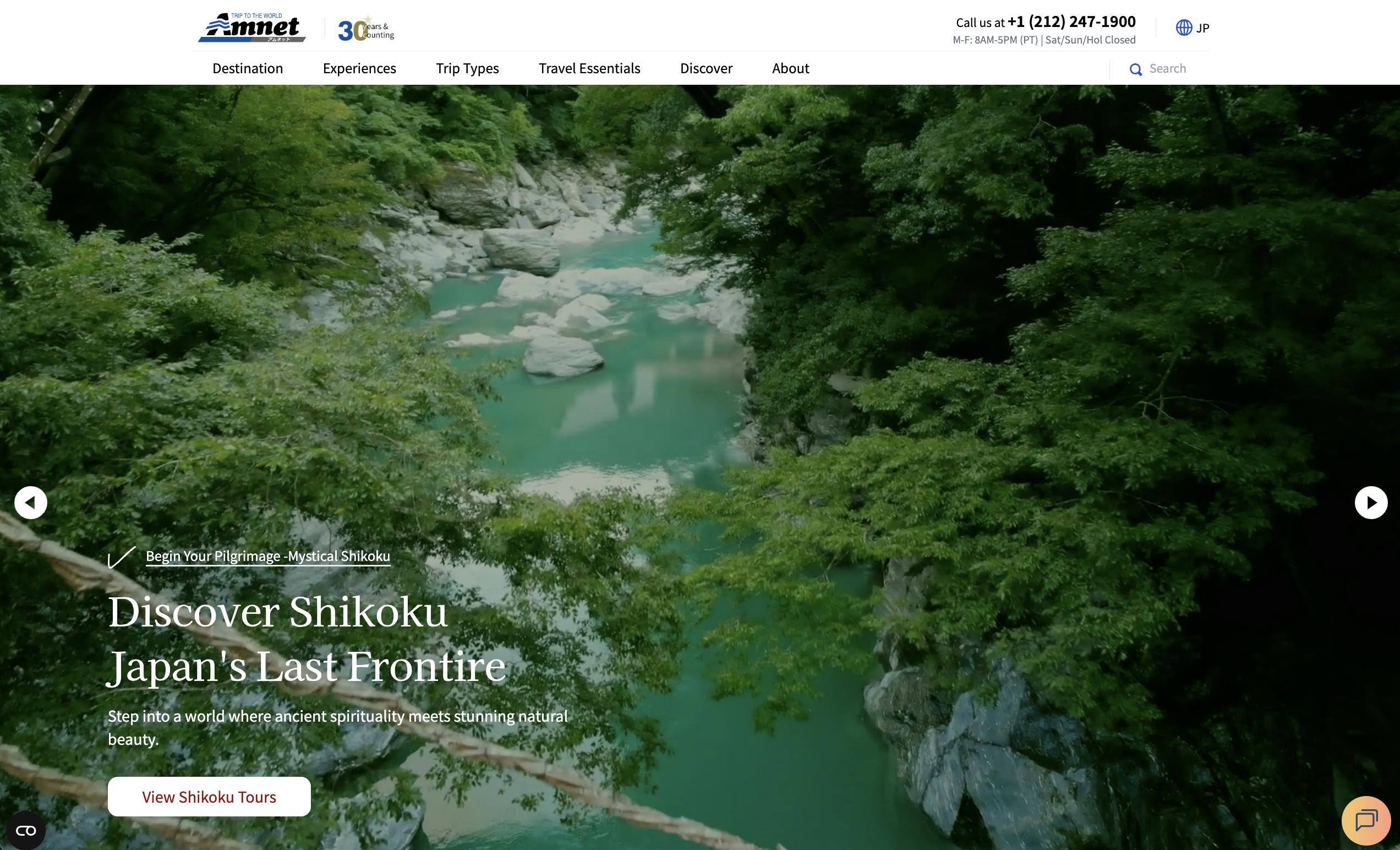
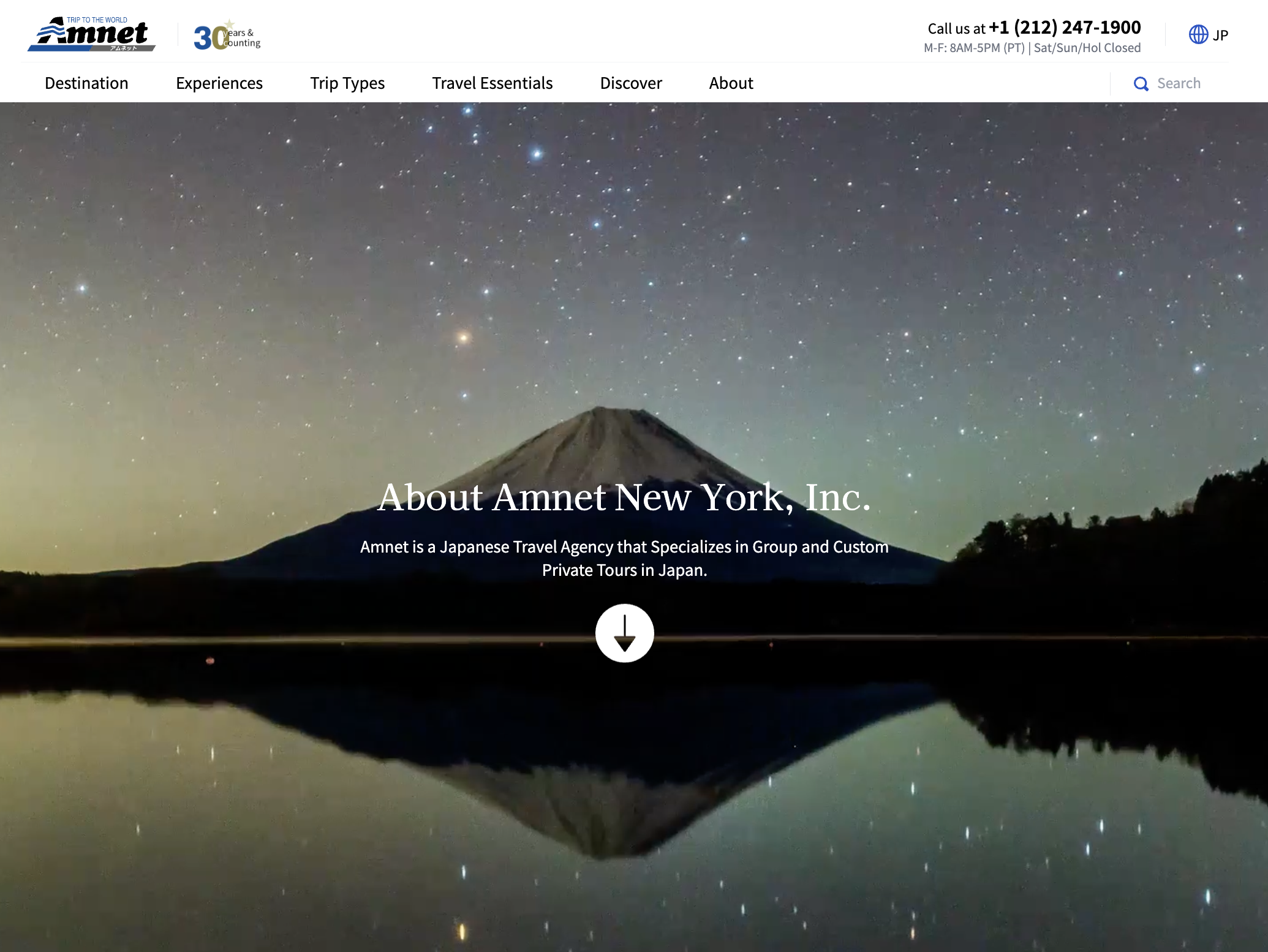
AMNET has built a strong presence in the U.S. as a trusted Japanese travel agency. But its digital setup was working against that position. The Japanese site lived on WordPress, while the English site was on Squarespace. They operated separately, and neither was really supporting growth. The English site in particular struggled to gain traction, with fewer than 500 sessions per month. More importantly, it wasn't reaching the audience AMNET wanted to attract. At a certain point, maintaining two disconnected systems no longer made sense. The focus shifted toward building a single, unified platform—one that could extend beyond the Japanese-speaking market and connect with travelers actively planning trips to Japan. The goal was simple: stop maintaining, and start growing.
The challenge
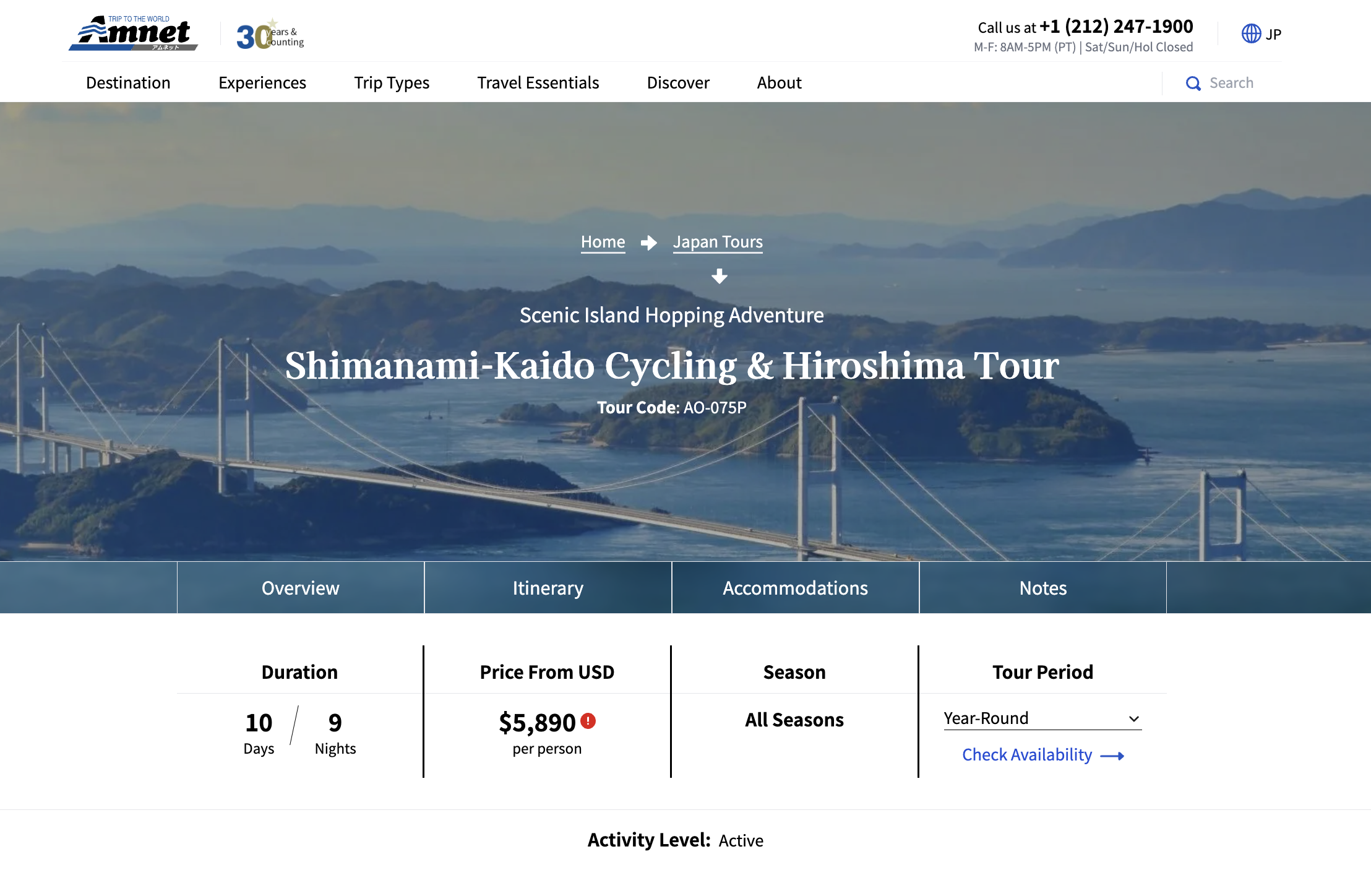
The issues ran deeper than platform choice. On the WordPress side, there was no clear structure around roles or permissions. Multiple contributors were able to make changes freely, which led to inconsistencies in both design and content. Over time, the site lost cohesion, and the user experience suffered. The English site faced a different set of problems. SEM efforts were not performing, and key pages—especially tour listings—lacked clarity and direction. The structure didn't support user intent, and the experience didn't guide visitors toward conversion. Across both sites, traffic had plateaued. Inbound bookings were rare, and opportunities were being missed. At the same time, there was a clear business need to begin selling products such as JR Pass online, in line with competitors already offering seamless purchasing experiences. The existing setup simply couldn't support that move.
The solution
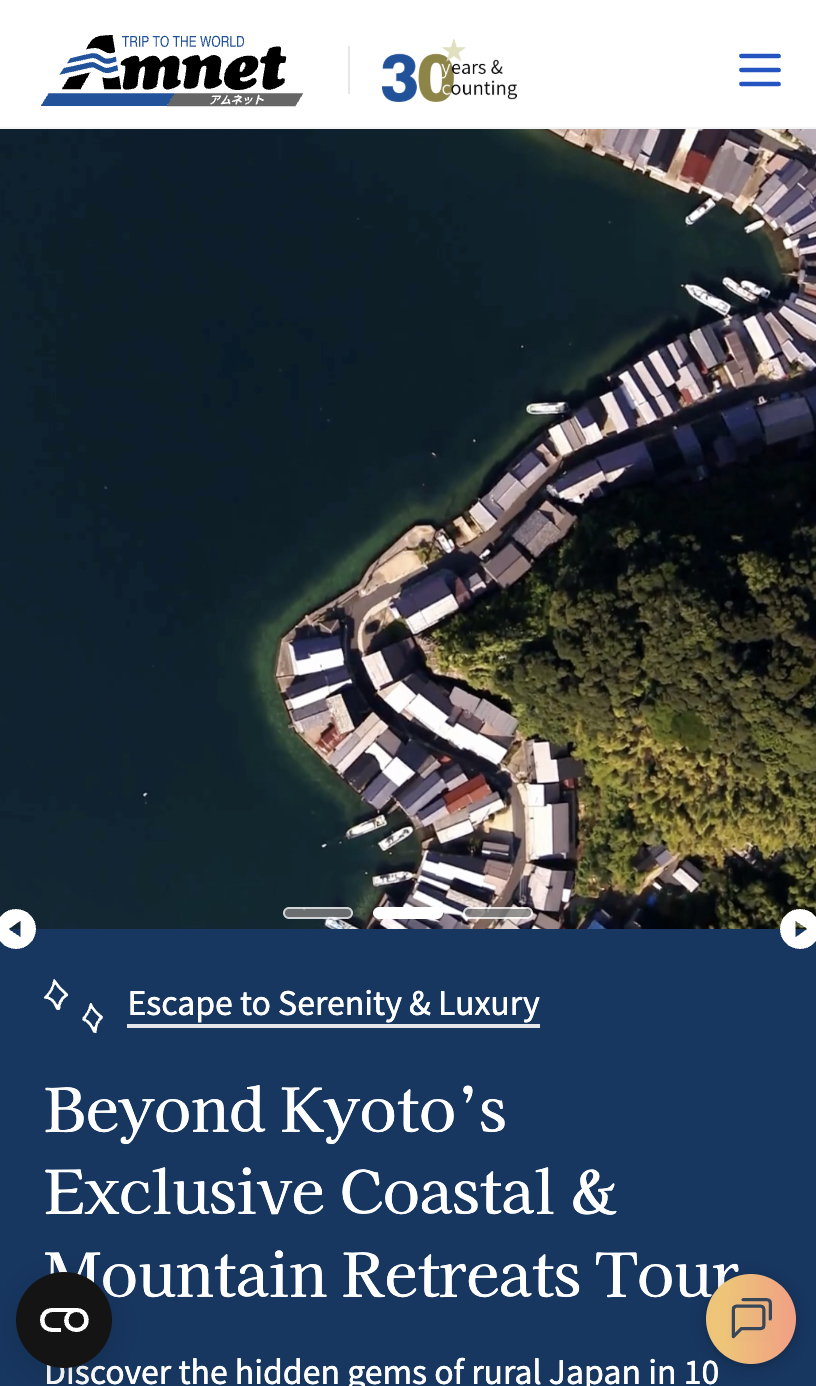
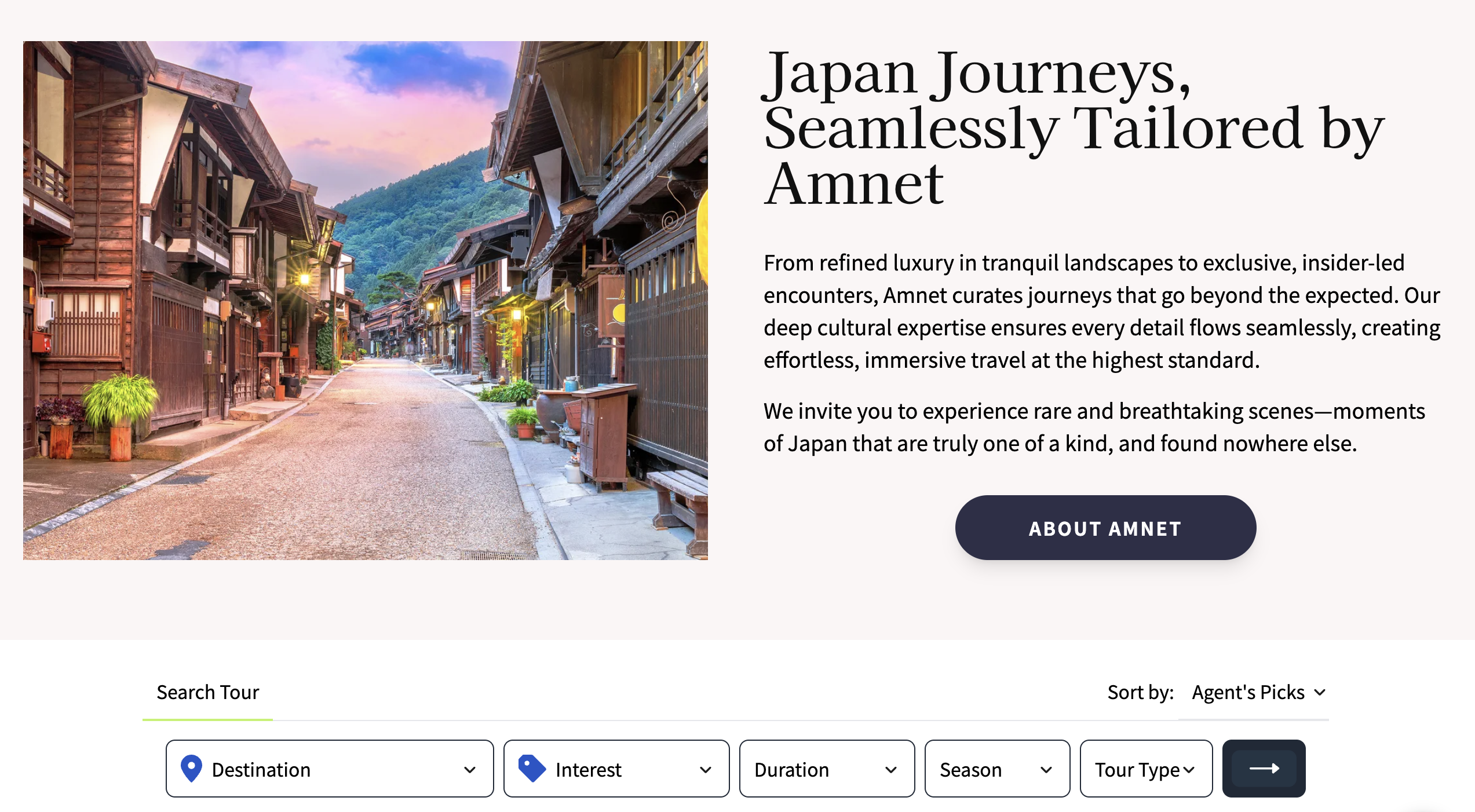
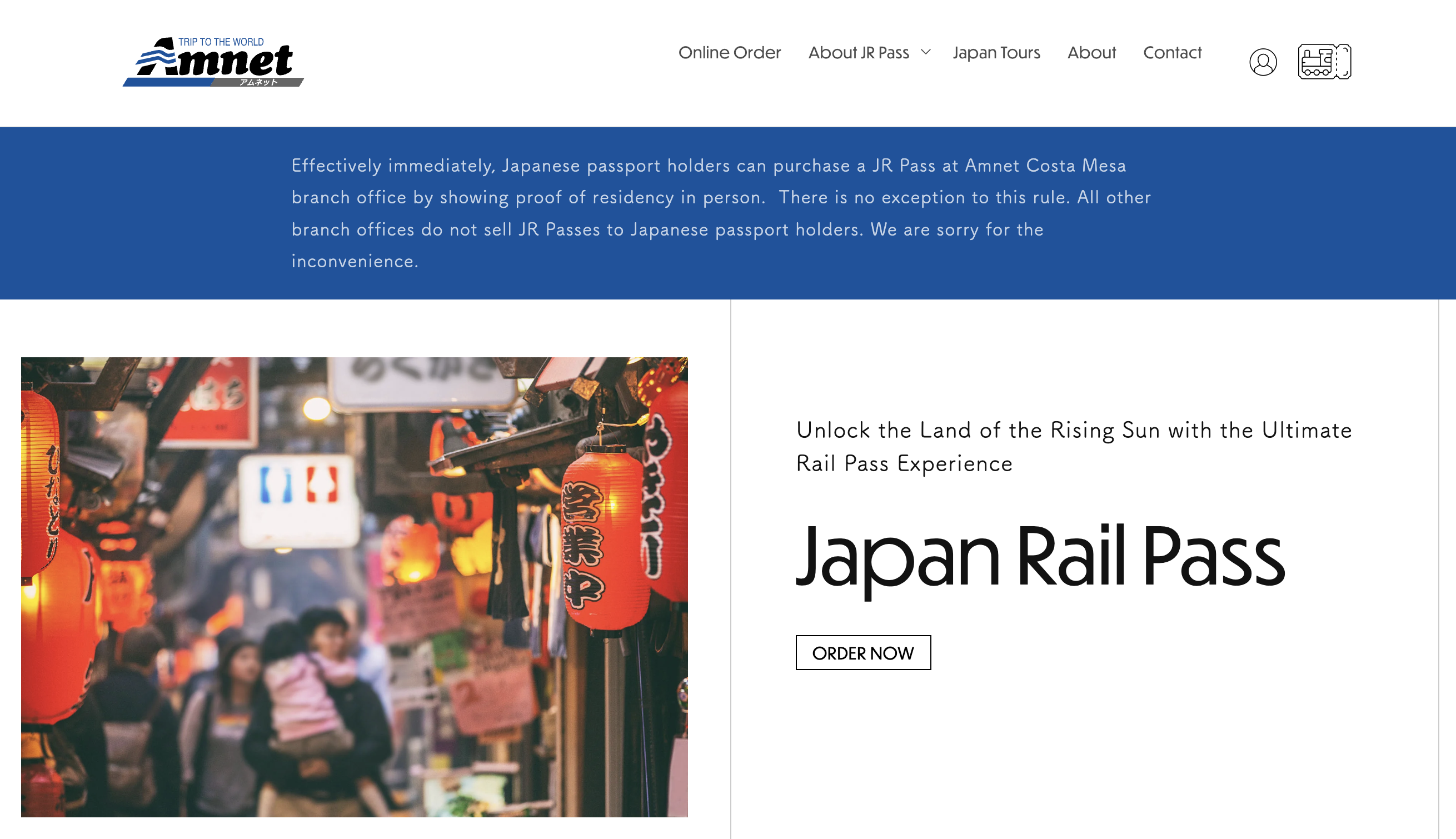
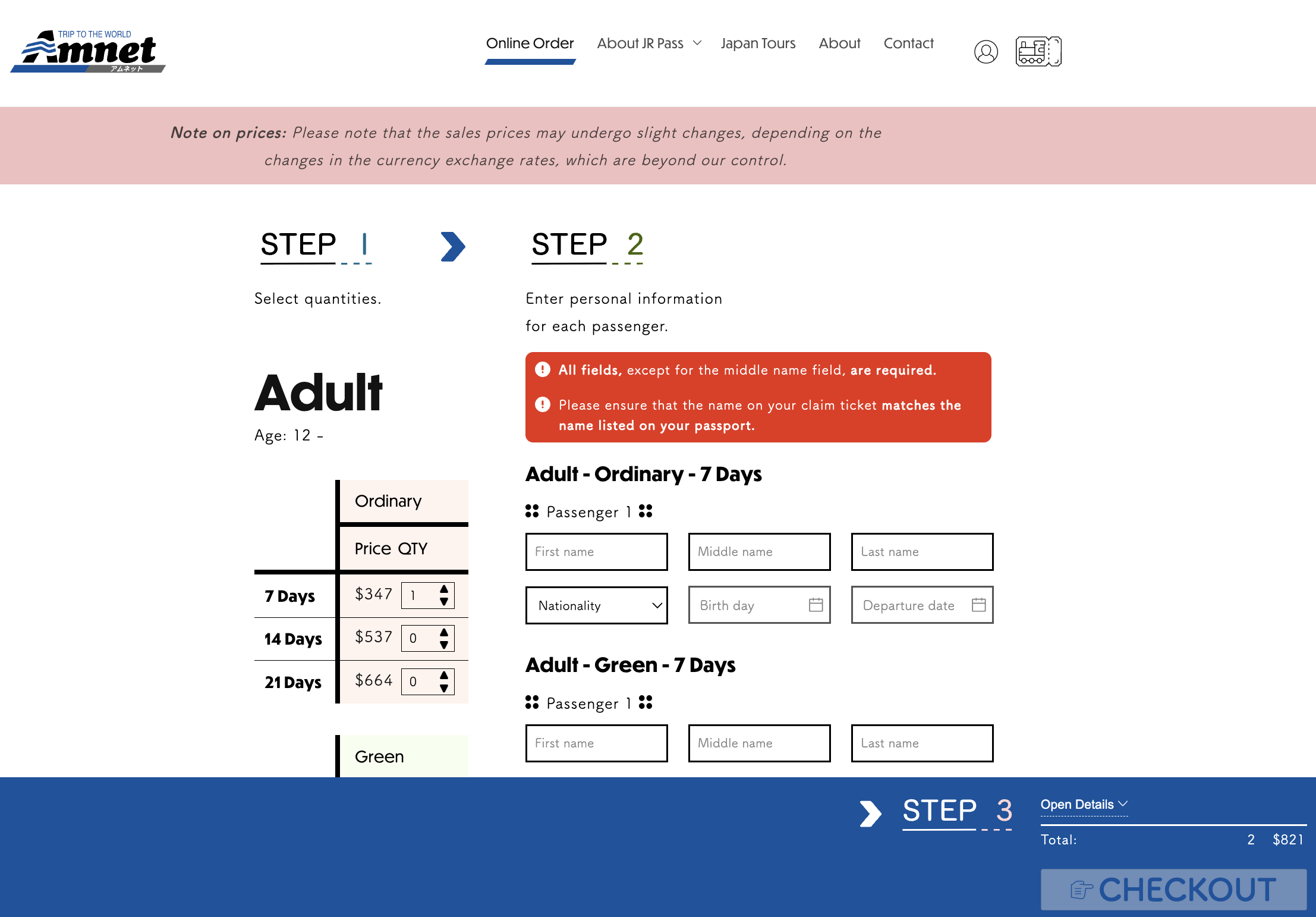
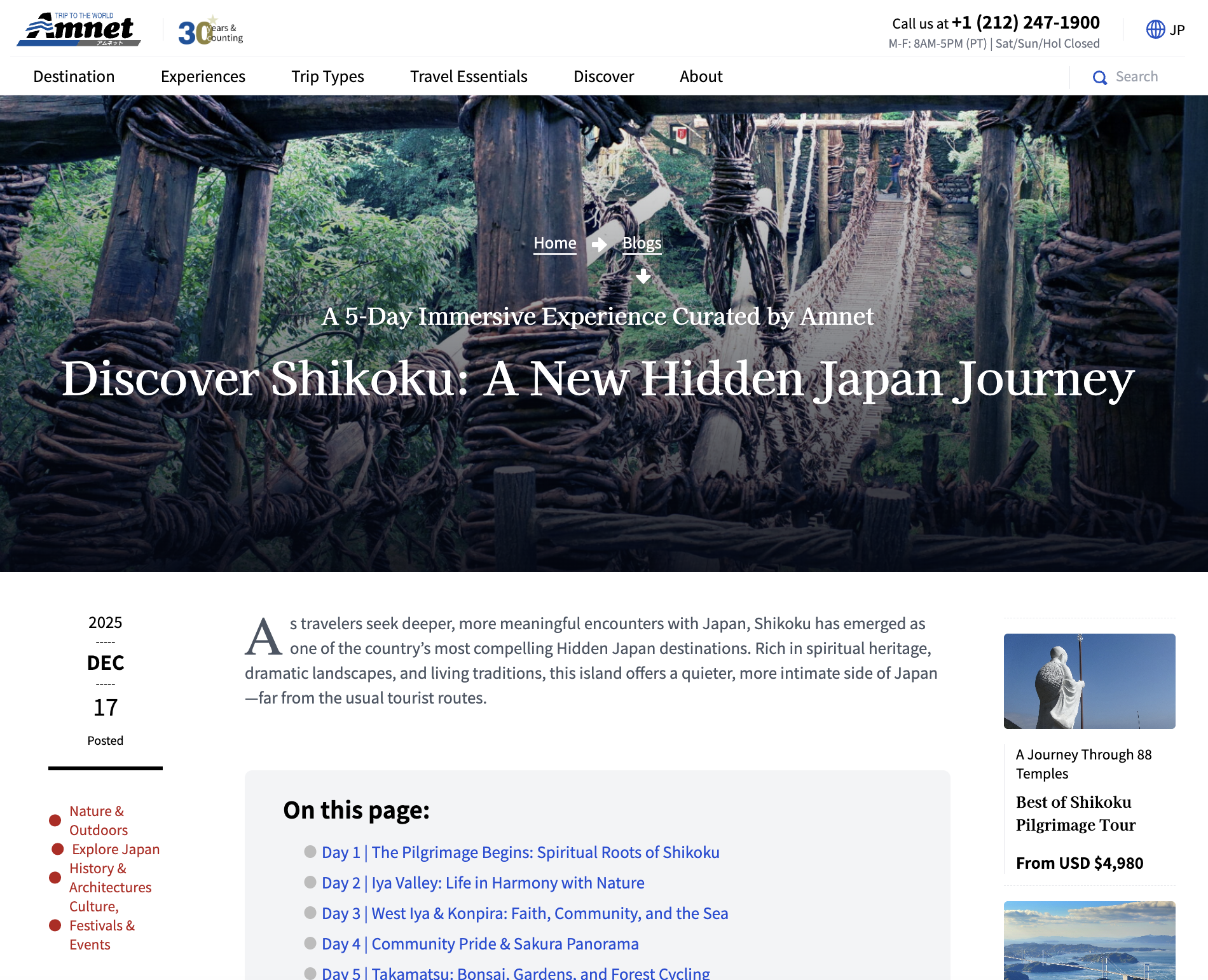
The rebuild focused on creating a system that could support both current operations and future growth. Storyblok was introduced as the content foundation. It provided structured content management along with proper role control, allowing teams to collaborate without compromising consistency. The visual editor made it possible to preview changes in real time, which significantly improved the speed and accuracy of updates. For commerce, Shopify was implemented to handle products like JR Pass. It offered a stable and scalable purchasing experience without requiring a custom build, while still allowing room for expansion. Feathery.io was used to create flexible, high-performing forms tailored to different user flows. All submissions were connected directly to HubSpot, where Contacts and Deals are automatically created and managed. This made it possible to centralize customer data and build a more responsive sales process. Each part of the system was designed to work together, rather than operate in isolation.
Results
The impact was visible within months. The English site saw a 150% increase in sessions compared to pre-launch levels. More importantly, the quality of traffic improved, leading to a significant rise in inquiries. Contacts captured in HubSpot increased by over 200 percent, giving the team a much stronger pipeline to work with. Beyond the numbers, the internal shift was just as important. Content updates became faster and more controlled. New initiatives could be launched without reworking the entire system. The platform no longer limited what the business could do. With a component-based structure in place, AMNET is now able to introduce new features as needed, without slowing down. The site has moved from something that required constant maintenance to something that actively supports growth.
Impact
+150%
English site sessions ↑
+200%
HubSpot contacts ↑
Significant
Inquiries ↑